From Boro to Kpo-Fire: Why Nigeria Still Hasn’t Solved the Niger Delta Question.
By Akpodigha Filatei
A six-decade struggle for resource control has evolved from protest to militancy to informal economies — and Nigeria still hasn’t addressed the root cause.
The Long Arc of a Single Demand
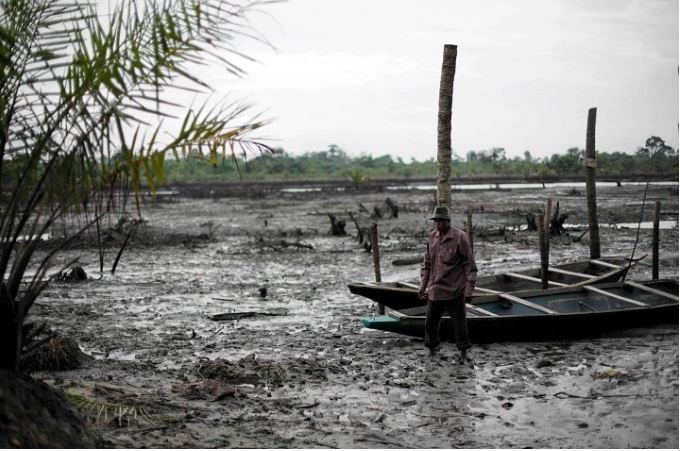
Nigeria’s oil wealth has never been neutral in the Niger Delta. For more than six decades, it has delivered immense national revenue while entrenching local deprivation, ecological collapse, and political exclusion. Across generations, the people of the Delta have articulated one consistent demand: resource control — the right to own, benefit from, and determine the use of the resources beneath their land.
What has changed is not the demand, but its expression. Each time the Nigerian state suppresses one form of agitation, another emerges — more adaptive, more disruptive, and more difficult to contain.
This is the central lesson history offers. It is also the warning Nigeria continues to ignore.
From Boro to Kaiama: The Idea That Never Died
The struggle did not begin with militancy; it began with principle.
Isaac Adaka Boro’s 1966 uprising was not a senseless rebellion — it was an early articulation of economic justice. He challenged a system where oil wealth was extracted from the Delta but redistributed elsewhere, leaving producing communities impoverished.
Ken Saro-Wiwa and MOSOP reframed the struggle in moral and environmental terms. The Ogoni Bill of Rights made a powerful case: environmental destruction without compensation, extraction without equity, governance without representation. The state’s brutal response in 1995 did not silence the message; it legitimised it globally.
By 1998, the Kaiama Declaration transformed the demand into a regional consensus: oil resources belong to the people of the Niger Delta. This was not radicalism — it was a call for restructuring Nigeria’s political economy.
Yet the state refused to engage meaningfully. And so, the struggle evolved.
Militancy Was Not the End — It Was a Phase
Militant groups like MEND did not emerge in a vacuum. They were the predictable consequence of decades of ignored grievances. Their actions — pipeline bombings, kidnappings, shutdowns — were disruptive, but their objective remained clear: a fair share of oil wealth and control over resources.
The 2009 Amnesty Programme reduced violence, but it did not resolve the structural injustice. It substituted stipends for sovereignty, contracts for control, and temporary calm for lasting reform.
The result was inevitable: the struggle did not end — it decentralised
Kpo-Fire: Criminality or Grassroots Resource Control?
The rise of artisanal refining — popularly known as kpo-fire — must be understood correctly.
Kpo-fire was not merely a criminal enterprise. It was a crude but direct form of resource control.
Communities that had been excluded from the formal oil economy created their own parallel system:
- They accessed crude oil from pipelines running through their land
- They refined it locally using improvised technology
- They sold the products within regional markets
In essence, kpo-fire was a grassroots assertion of economic rights in the absence of legal access. It was inefficient, environmentally harmful, and outside the law — but it was also a practical expression of ownership in a system that denied it.
When legitimate resource control is denied, informal control emerges.
In essence, kpo-fire was a grassroots assertion of economic rights in the absence of legal access. It was inefficient, environmentally harmful, and outside the law — but it was also a practical expression of ownership in a system that denied it.
When legitimate resource control is denied, informal control emerges.
The Petroleum Industry Act: Promise Without Power
The Petroleum Industry Act (PIA) was widely presented as a historic reform. On paper, it introduced mechanisms intended to address long-standing grievances:
- Host Community Development Trusts (HCDTs):
Oil companies are required to contribute 3% of their operating expenditure to community trusts
- Community participation structures
- Regulatory restructuring of the oil sector
However, in practice, the PIA falls far short of genuine resource control.
. The 3% Problem
Three percent of operating expenditure is not resource ownership — it is corporate philanthropy institutionalised.
2. No Equity, No Ownership
Host communities remain non-owners of the resources beneath their land.
3. Centralised Control Persists
The federal government retains overwhelming control over oil resources.
4. Weak Implementation
Community trusts are inconsistently implemented and vulnerable to elite capture.
5. Environmental Justice Still Secondary
Communities continue to bear the cost of environmental degradation.
The PIA manages discontent — it does not resolve it.
The Illusion of Stability
Recent efforts to curb oil theft and dismantle kpo-fire networks have achieved measurable success.
But this is not a resolution. It is suppression.
History shows a clear pattern:
- Suppress agitation → temporary calm
- Ignore root causes → new form of resistance emerges
From Boro to Saro-Wiwa, from Kaiama to MEND, from militancy to kpo-fire — each phase has been more complex than the last.
If resource control remains unresolved, the next phase will be even harder to contain.
What Real Resource Control Must Look Like
Nigeria now has a narrow window to act decisively.
Meaningful reform must go beyond the PIA and include:
- Increased derivation beyond 13%
- Equity participation for host communities
- Decentralised fiscal federalism
- Direct revenue flows to communities
- Strong environmental accountability
These are not radical demands. They are the minimum conditions for justice, stability, and long-term economic sustainability.
The Final Warning
The Niger Delta has spoken consistently for over sixty years.
Each generation has used different methods, but the message has never changed:
Resource control is not optional. It is inevitable.
Kpo-fire was not an aberration — it was a signal.
A signal that when formal systems exclude people, they will build their own.
Nigeria can either:
- Recognise this reality and reform its oil governance framework, or
- Continue suppressing symptoms while the underlying pressure builds
History is unequivocal about what happens next.
Justice delayed does not disappear — it returns, stronger, smarter, and far more costly.
Akpodigha Filatei writes from Ottawa, Canada