Group Calls for Stronger UBE Act To Enhance Learning As Out-Of-School Crisis Increases.
By Ferdinand Olise
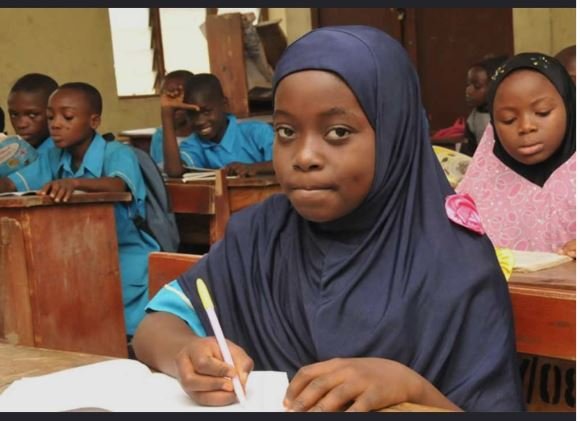
As the number of out-of-school children increases in Nigeria, the Plan International Nigeria has called on governments at all levels to show genuine commitment to addressing issues that keep Nigerian children out of school.
It is estimated that the number of children without access to education in Nigeria rose from 10.5 million to close to 20 million in 2024. It is also estimated that globally, the number of out-of-school in Nigeria ranges from 18.3 million to 20 million, and 60% of this number are girls.
Speaking in Abuja on Thursday at press conference on strengthening the Universal Basic Education Act: Advancing Inclusive, Equitable, and Sustainable Education for all in Nigeria”, the Country Director, Plan International Nigeria, Dr. Charles Usie, said the reasons for increase in the number of children out of learning spaces include displacement by conflict, harmful socio-cultural practices, discrimination, early marriage, absence of menstrual hygiene system in schools, poor infrastructure, exclusion due to poverty, lack of learning materials, and lack of teachers.
Dr Usie noted that Nigeria passed a Universal Basic Education law of which the implementation is suffering setbacks.
“In 2004, the country passed a Universal Basic Education law, the UBE Act which promises free, compulsory education from primary to junior secondary school, unfortunately, non-compliance, paltry funding at 2% of consolidat e revenue, and States dodging their 50% matching funds, have turned the promise in the UBEC Act into a fantasy.
“Only 26% of children who complete junior secondary make it to senior secondary. This is not a mere figure or statistics, but a story stolen dreams in the streets of major cities, small towns, villages, communities, and hamlets across the country.
“More than two decades after the passage of the University Basic Education law, significant implementation gaps remain, with the goal of guaranteeing access to education and reducing the growing number of children outside the school system. Funding remains inadequate, State compliance with counterpart funding obligations remains weak, infrastructure deficits continue to widen, teachers shortages persist, and issues related to the dignity of girls in school remain un-addressed”, he said.
On her part, the Director, Program Quality and Influencing, Dr. Helen Idiong, said, the number of children that are out of school every single day is not just alarming, but also worrisome because of what the future looks like tomorrow.
“If you are having these young children out of school, not doing anything, the chances of their being recruited into evil is very high in Nigeria. We are seeing insurgency and it just seems that every day is growing worse.
“Sometimes you wonder where are they getting the foot soldiers? If you look closely, it’s children that were not able to train today. As an organization, from 2016 up till today, we can say that we have been able to ensure that about 4.1 million children are in school”, she said.
Also, underscoring the importance of quality hygiene system in schools, the National Coordinator, Girls Get Equal, Jennifer James, highlighted the importance of making available quality infrastructure, water, and hygienic environment to help girls stay in school when they are menstruating.
“Talking about out-of-school Children, 66% of them are girls. Most girls do not go to school during menstruation because they don’t feel safe among their colleagues”, she said.
She therefore called on the government to make it a priority to assist girls in school by providing sanitary pads and other provisions that will make them stay hygienic in school while learning.
The Plan International Nigeria therefore highlighted that the Nigerian education sector is facing issues of non-compliance with the UBE counterpart funding, inadequate funding allocation, non-justiciability of the right to education, inclusion of Senior Secondary and Vocational Education, barriers to girls education, gaps in legal provisions and implementation, Constitutional barrier to rights enforcement.
The organisation therefore called on the government to increase allocation of funds for UBEC from consolidated revenue, amendment of penalties as corrective measures to Parents who violate the Act.
They also called for the amendment to the level of Basic Education to ensure inclusion of Senior Secondary and vocational education, holistic attention to girls rights, ensuring access to quality and safe learning environments by providing in the Act, a mandatory establishment of Menstrual Hygiene Stations in Schools.
They also demanded constitutional amendment to solidify education as a legally enforceable right, ensuring greater access, and compelling State governments to priortise compliance with education rights in Nigeria.