
Day The Devil Killed An Angel…..Tupac Shakur, Keffe D and the Long Shadow of a Murder That Shook the World.
By Owolola Adebola
Some deaths bury a human being. Others bury possibilities, silence a generation’s voice and leave the world wondering what might have been.
The death of Tupac Amaru Shakur belongs to the latter category. On September 7, 1996, the streets of Las Vegas witnessed the violent destruction of a young life whose voice had become the soundtrack of anger, rebellion, social consciousness and Black identity. Six days later, on September 13, the world lost Tupac at just 25.
It was the day the devil killed an angel—not because Tupac was without flaws, but because a restless, brilliant and controversial young man with enormous creative possibilities was taken from the world by bullets when his story was still unfolding.
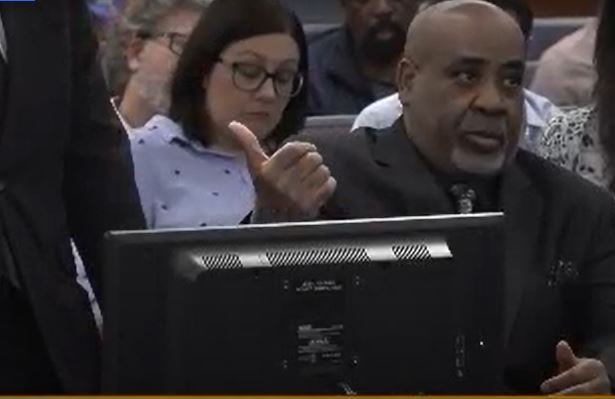
Nearly three decades later, the long shadow of that night has reached a decisive legal milestone. Duane “Keffe D” Davis, the former gang leader accused of orchestrating the fatal shooting, was convicted of murder in August 2026 and sentenced on October 13 to 40 years to life in prison. The conviction brought a measure of accountability to a case that had tormented Tupac’s family and fascinated music lovers for generations. Davis has indicated that he intends to appeal.
Who does not know thatTupac was more than a rapper? He was a poet with a street vocabulary, a storyteller whose verses carried the bruises of poverty, racism, violence and fractured family relationships. He could be tender in one song, furious in another and painfully reflective in the next. His music gave expression to the frustrations of young people who felt abandoned by the institutions supposedly established to protect them.
In songs such as Changes, Dear Mama and Keep Ya Head Up, Tupac demonstrated that rap could be both entertainment and social commentary. He confronted injustice, celebrated maternal sacrifice and challenged society to examine its treatment of the poor and vulnerable.
Yet his life also unfolded amid controversy, confrontations and the increasingly combustible rivalries surrounding American hip-hop in the 1990s. His public persona often blurred the boundaries between artistic performance and street conflict. As tensions intensified, the distinction between a celebrity’s image and the dangers surrounding his real life became tragically consequential.
Tupac was not merely a star who died young. He was an unfinished story.
The events leading to his death began with a confrontation at the MGM Grand in Las Vegas on September 7, 1996. Tupac and members of his entourage became involved in an altercation with Orlando Anderson, the nephew of Davis, who was associated with the South Side Compton Crips gang. Later that night, Tupac was travelling in a BMW driven by Marion “Suge” Knight, the head of Death Row Records, when a white Cadillac pulled alongside their vehicle at a traffic light. Gunfire erupted. Tupac was struck multiple times, while Knight also sustained injuries.
The rapper fought for his life in hospital but died six days later. What followed was nearly 30 years of unanswered questions, speculation and frustration. The killing became one of the most notorious unsolved cases in popular music, feeding conspiracy theories and deepening the mythology surrounding a man whose death seemed almost too extraordinary for ordinary explanation.
But beneath the mythology was a simple, devastating reality: a family had lost a son and brother, a daughter had lost a father, and millions of admirers had lost an artist whose potential could never be fully measured. Then enters a long road toaccountability.
For years, the investigation struggled to produce a conviction. Then Davis’s own public statements, interviews and memoir, Compton Street Legend, became central to the prosecution’s case. Prosecutors argued that Davis helped organise the retaliatory attack and supplied the weapon used in the shooting. Davis was not identified as the person who pulled the trigger; prosecutors maintained that his role in arranging the attack nevertheless made him criminally responsible.
On August 31, 2026, a Las Vegas jury found him guilty of murder. On October 13, a judge sentenced him to 40 years to life in prison. His conviction represented a historic development in the case, although his planned appeal means the legal process may continue.
The judgment does not restore Tupac’s life. It cannot give his family back the years they were denied, nor can it return the music he might have created, the performances he might have delivered or the causes he might have championed.
But it establishes a powerful principle: the passage of time does not automatically erase responsibility. Then comes the question: Is Justice another name for atonement?
Atonement is a difficult word when the harm is irreversible. It suggests an acknowledgement of wrongdoing, an acceptance of responsibility and an effort to confront the consequences of one’s actions. For a man held responsible by a jury for helping orchestrate Tupac’s killing, imprisonment is a consequence of the crime, not necessarily proof of personal repentance. Public reporting surrounding Davis’s conviction and sentencing does not, by itself, establish that he has genuinely repented or undertaken a personal journey of atonement. In his wise,distinction matters.
A person may face punishment without finding remorse. He may acknowledge involvement without fully appreciating the human devastation that followed. And even sincere regret, if it exists, cannot negotiate a life back from the grave. If atonement is to mean anything in this tragedy, it must begin with the recognition that Tupac was not merely a name in a police file or a prize in a gang rivalry. He was a human being with a family, ambitions, contradictions and a future that belonged to him.
The greatest possible tribute would be for the tragedy to teach future generations that revenge is not strength, that street allegiance is not worth a human life, and that violence cannot settle a dispute without creating another wound.
It is then sane and save to infer that angel lives beyond the grave.
Tupac’s killers could end his breathing, but they could not end his influence. His records continue to travel across continents. His lyrics still enter conversations about race, inequality, policing, poverty and the struggles of young people searching for dignity and recognition in a warped and hostile world.
His death also forces us to confront the price of glorifying violence until it becomes difficult to distinguish bravado from a genuine threat. The culture that celebrates the fallen warrior must also examine the conditions that keep producing funerals for young men whose talents could have enriched the world for decades.
Perhaps that is the cruelest irony of Tupac’s death: the man who spoke so powerfully about life’s contradictions became the victim of one of its most senseless. The devil, in this story, is not simply an individual. It is also the spirit of vengeance, the hunger for retaliation and the destructive pride that persuades people to answer humiliation with bullets.
Keffe D’s conviction and sentence may bring a measure of closure, but closure is not resurrection. Justice may hold a perpetrator accountable, but it cannot reverse the clock.
On that September night in 1996, a young man’s future was violently interrupted. The world lost Tupac Shakur, but history refused to forget him.
And so, the angel remains—not in the flesh, but in the music, the memories and the questions his life continues to ask of us. Tupac is gone. His voice remains. And the lesson of his death is written in blood: revenge may satisfy a moment’s anger, but it can condemn a lifetime and leave generations mourning what should never have been lost.