Nigeria Adopts Hydrogen Policy To Boost Investments, Drive Clean Energy Transition, Achieve Net-Zero Goal.
By Ferdinand Olise
The Federal Government has validated Nigeria’s National Hydrogen Policy, as the GIZ implemented Decarbonisation Diplomacy presented the updated National Hydrogen Policy Draft using stakeholders’ feedback provided from the 2025 policy review sessions in Abuja, Kano and Lagos States.
This move marked a major step in the country’s transition to cleaner energy and lays a foundation for the development of a hydrogen economy which is aimed at attracting investments, creating jobs and diversifying the nation’s energy mix.
The objective of the Workshop was to refine the draft policy, resolve conflicts, and agree on a final validated version.
The policy, which will be forwarded to the National Economic Council and the Federal Executive Council for approval, sought to position of Nigeria as a regional leader in both blue and green hydrogen production while supporting its net-zero emissions target by 2060.
Speaking in Abuja at the National Hydrogen Policy Validation Workshop, the Cluster Coordinator, Just and Inclusion Cluster, GIZ Nigeria and ECOWAS, Jochen Rudolph said GIZ, as Germany’s agency for international cooperation has played a substantial role in the energy sector between Nigeria and Germany through the Nigerian energy support program implemented by GIZ since 2013, which led to significant initiatives that have advanced energy access, clean energy, energy efficiency measures and, job creation all along across Nigeria.
“In 2021, the partnership further expanded with the inauguration of the German-Nigerian Hydrogen Office. Through this Office, Germany provides coordinated financial and technical advisory support.
“Germany has published its own first National Hydrogen Strategy in 2020 and has already revised it twice since, because this is a fast-moving and evolving sector. We are laying a solid foundation, a milestone that gives Nigeria’s hydrogen sector a strong and credible start with little room to grow and adapt as the sector matures.
GIZ continues to be fully committed to this process and this remains for us actually a flagship project.
“As countries accelerate decarbonization efforts, hydrogen is emerging as a key energy carrier and enabler of global energy transition, particularly in hard-to-abate sectors. For Nigeria, this policy provides an opportunity to find a strategic pathway that leverages the resources, strength and the industrial competitiveness of Nigeria, attracts investment and supports sustainable development. You will have GIZ’s continued support as you carry the work forward through today’s validation and of course beyond”, he said.
A member of the Hydrogen Committee, Kayode Mariam, who represented the Budget Ministry as well as the Ministry of Petroleum Resources, said this is another important milestone in the hydrogen policy development in Nigeria. She said the dry hydrogen is essential for Nigeria as it will promote the energy mix as well as economic growth, which is the aim and objective of the Ministerial Budget and Economic Plan.
Also, the Director, Department of Climate Change, Asmau Jibril, who represented the Minister of Environment, Balarabe Lawal, said as the global energy landscape continues to evolve, hydrogen presents a strategic opportunity for Nigeria to harness its abundant natural resources while advancing sustainable development.
He added that the Federal Ministry of Environment recognizes that the transition to a hydrogen economy must be environmentally responsible, socially inclusive and economically beneficial.
On his part, the Director, Health and Safety, Mr. Amos Oliver, who represented the Authority Chief Executive, Nigeria Midstream and Downstream Petroleum Regulatory Authority, Rabiu Umar, said their tireless efforts have successfully steered the National Draft Hydrogen Policy from its initial conceptual stages to the crucial validation phase. “Hydrogen is not merely a fuel of the future, it is a critical anchor for Nigeria’s current energy diversification, sustainable industrialization and just transition goals.
“Today’s workshop is a defining milestone that completes the policy cycle, ensuring that our National Strategic Policy represents the collective aspirations of key stakeholders.
Hydrogen is not merely a fuel of the future, it is a critical anchor for Nigeria’s current energy diversification, sustainable industrialization and just transition goals.
‘Hydrogen represents an exciting and highly strategic boundary, as Nigeria begins laying the groundwork to capture opportunities in both blue and green hydrogen pathways.
“A technically sound and robust national energy policy is the essential blueprint we need to bridge the gap between regulatory oversight and commercial execution. In looking forward, the NMDPR stands fully ready to collaborate with organizing ministries, sister agencies like NUPRC, the ECN and our international development partners”, he said.

The Deputy Director, Renewable Energy, Adeola Ijeoma, who represented the Managing Director of Energy Commission of Nigeria, Dr. Mustapha Abulahi, said Nigeria stands as a defining moment in its energy transition, and as Africa’s most populous nation and one of the largest economies, Nigeria has both the responsibility and the opportunity to help lead the continent’s clean energy transformation.
She noted that despite challenges such as widespread electricity access deficits and dependence on oil and gas revenues, Nigeria has more than 210 trillion cubic feet of proven natural gas reserves, abundant solar resources and significant renewable energy potential.
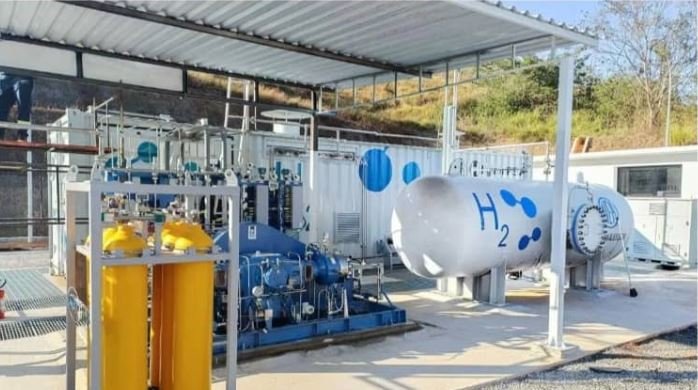
According to her, the draft policy adopts a phased strategy that initially leverages Nigeria’s natural gas resources and carbon capture technologies to produce blue hydrogen before progressively expanding green hydrogen production through renewable energy-powered electrolysis.
She said the approach aligns with Nigeria’s commitment to achieving net-zero carbon emissions by 2060. She urged stakeholders to critically examine the draft policy to ensure it reflects Nigeria’s infrastructure realities, regulatory needs and investment priorities.
“The policy we validate today will influence investment decisions, regulatory frameworks and industrial development for many years to come,” she said.
Meanwhile, Rapporteurs presented findings from breakout review sessions for final discussions and inputs.
The National Hydrogen Policy Validation Workshop brought together representatives of the Federal Ministries of Budget and Economic Planning, Environment, Petroleum Resources, the Energy Commission of Nigeria, the Nigeria Midstream and Downstream Petroleum Regulatory Authority, GIZ Nigeria and ECOWAS, among others.